
Self-built SaaS · Real-time AI
ScribeDash
A real-time speech-to-text web app that turns live audio into accurate, speaker-labeled transcripts as you speak. Plug in a microphone, hit record, and watch the words appear instantly, powered by AI running on my own GPU inference.
A look inside ScribeDash
From the landing page to the live recording studio.
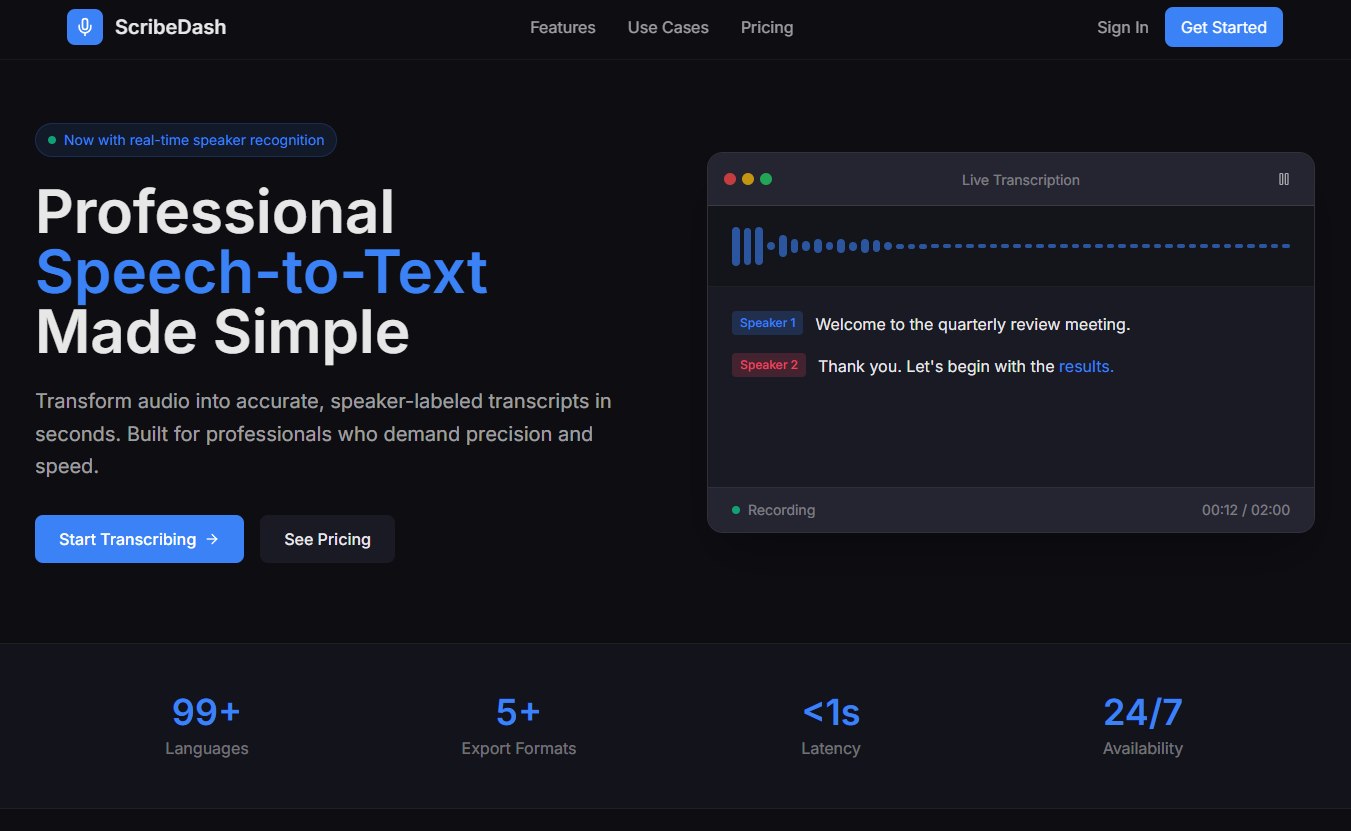
Professional speech-to-text
The landing page: turn audio into accurate, speaker-labeled transcripts in seconds.
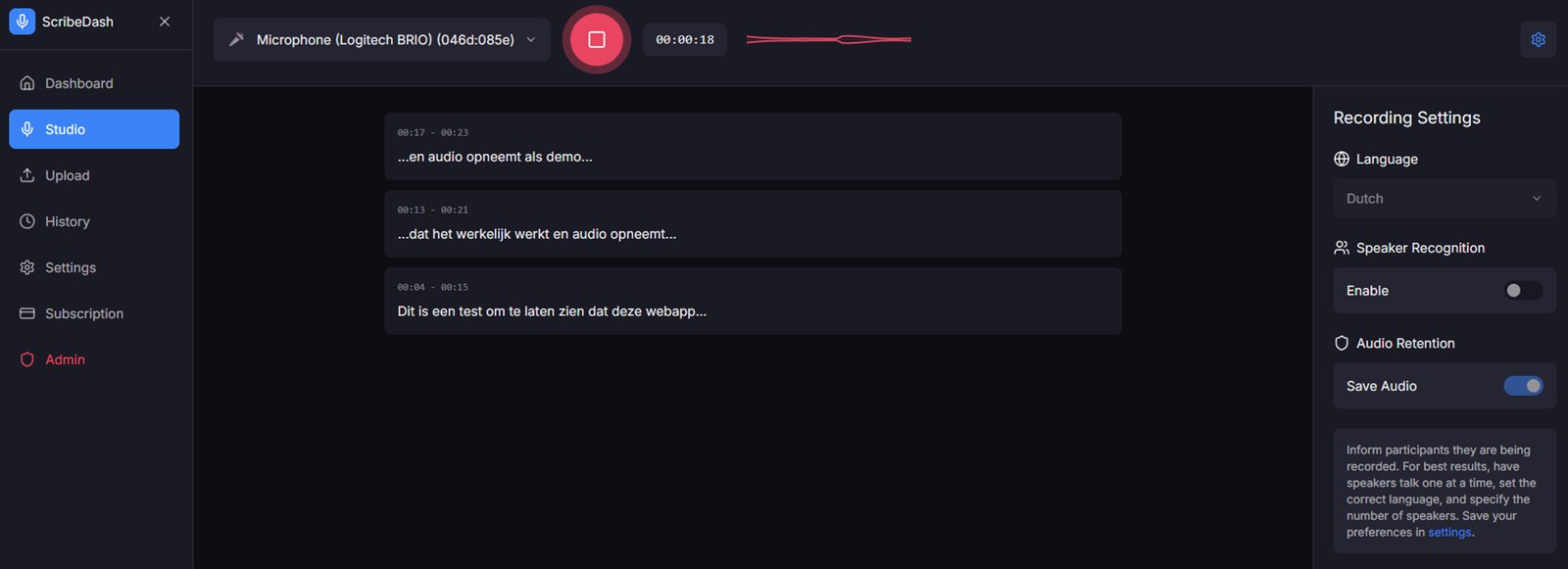
Live recording studio
Record from any microphone and watch the transcript stream in real time, with language and speaker-recognition settings.
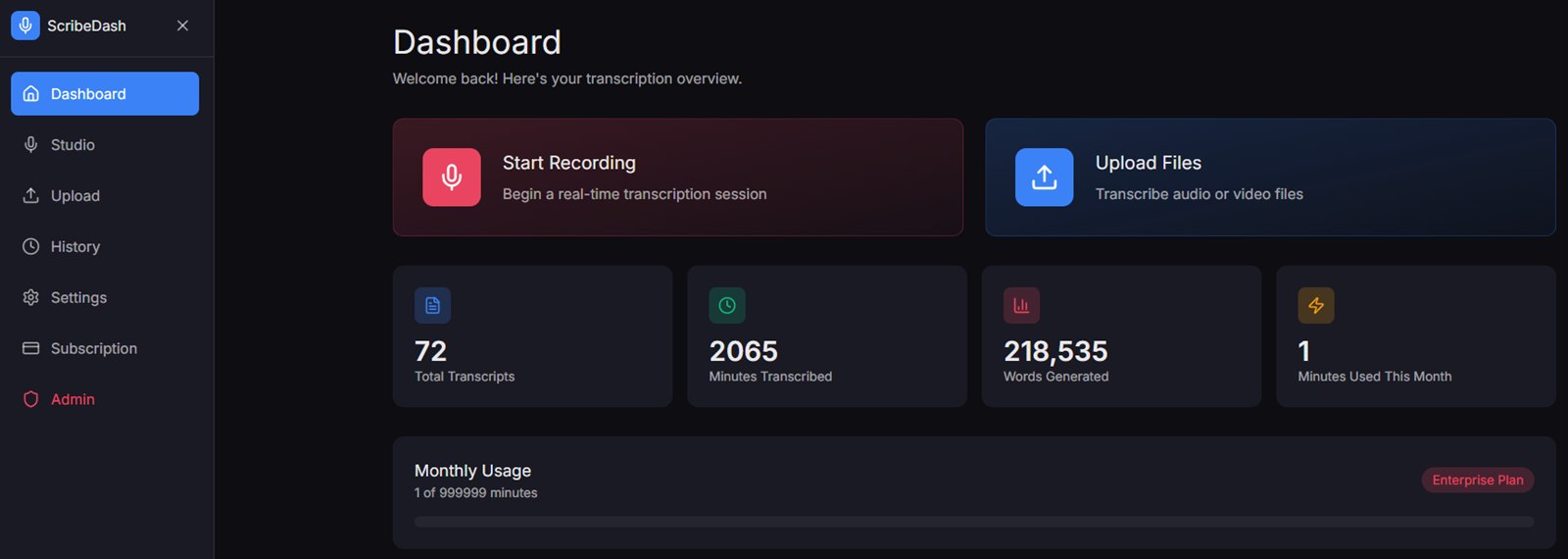
Your transcription dashboard
An overview of transcripts, minutes transcribed and words generated, with quick actions to record or upload.
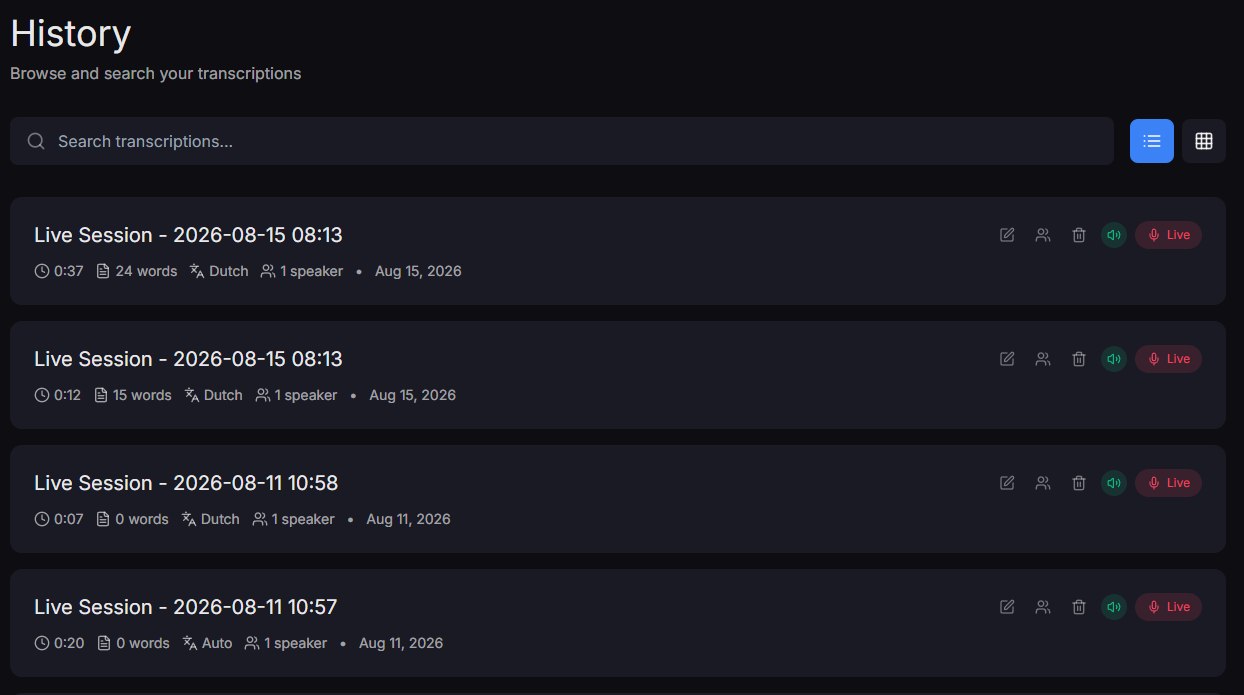
Searchable history
Every session saved, searchable and labeled by language, duration and speakers.
Project
ScribeDash
Type
Real-time transcription web app
Technology
React, WebSockets, GPU inference
Year
2025
Why I built ScribeDash
As a board secretary I regularly wrote up meeting minutes, so I know how valuable it is to have the recorded audio next to the transcribed text to verify, word for word, what was actually said. The catch: the transcription built into Office 365 was frankly unusable, and Copilot in Teams wore me out fast without being much help, so I decided to just build my own instead.
So I built ScribeDash: an online, real-time transcription web app. Connect a microphone, start recording, and your spoken words appear as text instantly, with speaker labels so you can see who said what. You can also upload existing audio or video files, or run a saved recording through the pipeline again to re-transcribe it.
Everything runs on my own sovereign infrastructure, which I manage end to end. The transcribed text of other users is never visible to me, so it is a genuinely private and safe way to handle sensitive recordings: think municipalities, confidential meetings and recording clients for verbatim minutes.
What it does
Real-time transcription
Speak and see the text appear within a second, with no waiting for uploads or batch processing.
Speaker recognition
Automatic speaker labels (Speaker 1, Speaker 2, ...) so minutes and interviews are easy to follow.
Own GPU inference
The AI models run on my own hardware, so there is no dependency on external transcription APIs and no data ever leaves my sovereign infrastructure.
Multilingual
Transcribe in many languages, with a clear language selector so the model knows exactly what to expect.
Upload audio & video
Not only live: drop in existing audio or video files and get a full, speaker-labeled transcript back.
Re-transcribe on demand
Run a saved recording through the pipeline again, for example with a different language or an improved model, without recording anything new.
The hardest part: multilingual, without drifting
The toughest challenge was wiring up an AI language model that handles multiple languages well.
The catch: once you pick a language, the model has to stick to it. A naive setup would drift, a Dutch sentence with one English word could suddenly flip the whole transcription to another language mid-session. For minutes that need to be verbatim, that is unacceptable.
How I solved it
Explicit language locking
The selected language is pinned for the whole session and passed to the model on every audio chunk, instead of letting it auto-detect per fragment.
Streaming inference on GPU
Audio is streamed to my own GPU in small chunks, so results are near-instant while staying consistent with the locked language.
Speaker-aware post-processing
Transcripts are stitched together and labeled per speaker, so the locked-language output stays clean and readable.
The result: pick Dutch and it stays Dutch, even with the occasional English word, so the transcript matches what was really said.
The result in numbers
<1s
Latency from speech to text
99+
Supported languages
100%
Sovereign cloud, no third-party access
The outcome
ScribeDash turns a tedious task, writing verbatim minutes, into something that happens live. During a meeting you already see the transcript building, and afterwards you can replay the audio next to the exact text.
Because everything runs on my own sovereign, self-managed infrastructure, and no one (not even me) can see other users transcripts, it stays fast, private and safe, even for the most sensitive topics.
Live
Text appears while you speak
Verbatim
Audio and text side by side
Private
Runs on own GPU, no external API
Under the hood
Want something like this?
From real-time AI apps to self-hosted models on your own hardware: if you can think it up, I can build it.